
A lot of local business owners ask the same question after a slow month, a website redesign, or a push to get more leads: social media management vs digital marketing – what’s the real difference, and which one do you actually need?
It’s a fair question, because the two are closely connected. They often support the same goals, use some of the same content, and get talked about as if they mean the same thing. But they are not the same service, and treating them like they are can lead to wasted budget, unclear expectations, and marketing that looks busy without producing much business value.
For small and mid-sized businesses in places like Santa Cruz, Scotts Valley, Watsonville, Monterey, and San Jose, clarity matters. If you are investing in growth, you need to know whether you need stronger social media execution, a broader marketing system, or both.
Social media management vs digital marketing: the core difference
The simplest way to think about it is this: social media management is one channel, while digital marketing is the full strategy across channels.
Social media management focuses on planning, creating, publishing, monitoring, and improving content on platforms like Instagram, Facebook, LinkedIn, TikTok, and X. It is about brand presence, audience engagement, consistency, and communication inside social platforms.
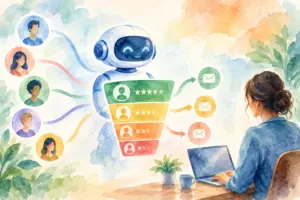
Digital marketing is broader. It includes social media, but it also covers your website, search engine optimization, paid advertising, email campaigns, content strategy, conversion tracking, lead generation, analytics, and often automation. In many cases, it also includes AI-supported tools that help businesses respond faster, qualify leads, and improve performance with better data.
So if social media management is one piece of the puzzle, digital marketing is the full picture.
That distinction matters because a business can have active social profiles and still have weak digital marketing overall. It can also run paid search campaigns and email campaigns with almost no social activity at all. The right mix depends on your market, your sales process, your goals, and how your customers actually find and choose you.
What social media management really covers
When people think of social media management, they often picture posting photos and writing captions. That is part of it, but effective management goes further.
A strong social media management service usually includes content planning, creative development, scheduling, audience engagement, profile optimization, platform-specific messaging, and performance review. It also means making sure your business shows up consistently and professionally, not just when someone on your team remembers to post.
For local businesses, this can be especially valuable. A restaurant, real estate office, med spa, contractor, gym, or retail shop often benefits from showing real work, local credibility, customer experiences, and day-to-day activity. Social platforms are good at building familiarity. They help people recognize your brand before they need you, and remember your business when they are ready to act.
But social media has limits. It can support trust and visibility, yet it does not always capture high-intent traffic. Someone scrolling Instagram is in a very different mindset than someone searching Google for a service they need right now. That is why social media alone usually does not cover the full marketing job.
What digital marketing includes beyond social
Digital marketing connects your entire online presence to business outcomes. Instead of focusing on one platform, it looks at how all your channels work together to attract, convert, and retain customers.
That may include SEO to improve visibility in search results, PPC ads to capture immediate demand, website optimization to improve conversions, email marketing to stay in touch with leads, content strategy to build authority, and analytics to track what is actually driving calls, form fills, bookings, and sales.
For many businesses, this is where momentum starts to build. A well-managed website turns traffic into action. Search marketing helps you get found by people already looking for your services. Email keeps your brand in front of past customers and warm prospects. Reporting shows what is working and where to adjust.
Digital marketing also creates room for smarter operations. AI tools can improve response times, help qualify leads, assist with content production, and support faster decision-making through cleaner reporting. That matters for business owners who do not just want more visibility – they want a more efficient system.
Why businesses confuse the two
The confusion usually comes from overlap. Social media is part of digital marketing, so people naturally use the terms loosely. Agencies sometimes blur the distinction too, especially when packaging services.
The problem shows up when a business expects full-funnel lead generation from a social-only plan, or expects a digital marketing campaign to succeed without strong brand content and engagement. Those mismatched expectations create frustration on both sides.
If your team says, “We need digital marketing,” but what you really need is consistent social content and community management, the solution should reflect that. On the other hand, if your business wants more qualified leads, stronger search visibility, and better ROI tracking, social posting by itself will not be enough.
When social media management is the right priority
There are cases where social media should come first.
If your business depends heavily on visual trust, local awareness, repeat attention, or community connection, social media can be one of the most valuable places to invest. It is often a strong fit for businesses with frequent updates, customer-facing experiences, or brands that benefit from personality and proof.
It also makes sense when your profiles are inactive, inconsistent, or out of step with your current brand. An outdated social presence can quietly hurt credibility. People check your profiles more often than many business owners realize.
That said, social media works best when expectations are realistic. It can increase awareness, engagement, and brand trust. It may support lead generation. But unless the strategy is tightly connected to offers, landing pages, and follow-up systems, it usually should not be treated as your only growth engine.
When digital marketing should be the bigger investment
If your main goals are lead generation, measurable traffic growth, better conversion rates, and clearer ROI, digital marketing should usually take priority.
This is especially true for service businesses where customers are actively searching online. If someone needs a roofer, attorney, dentist, HVAC company, home remodeler, or business consultant, they are likely to start with search, reviews, and websites – not social feeds.
In those situations, the bigger wins often come from improving your site, strengthening SEO, running targeted ad campaigns, building remarketing paths, and making sure every click has a purpose. Social media can support those efforts, but it is rarely the whole strategy.
A broader digital marketing approach is also the better fit when you need visibility into performance. Business owners should not have to guess which channels are bringing in results. Good reporting, conversion tracking, and campaign management turn marketing from a cost center into a growth system.
The smartest approach is usually both
For most growing businesses, social media management vs digital marketing is not really an either-or decision. It is a matter of scope, sequence, and priorities.
Social media helps shape perception. Digital marketing helps drive action. Social builds familiarity. Search captures intent. Content creates visibility. Conversion strategy turns attention into revenue.
The strongest results usually come when these pieces are aligned. A prospect might first see your business on Instagram, later search for your services on Google, visit your website, read reviews, and then submit a form after seeing a retargeting ad. That is real customer behavior. It is not linear, and it is rarely limited to one platform.
This is why integrated strategy matters. When your social content, website, advertising, SEO, and follow-up systems support each other, your marketing becomes more efficient and more effective. That is where local businesses often gain an advantage by working with a partner that understands both creative execution and measurable performance.
How to choose the right fit for your business
Start with your actual problem, not the service label.
If your business looks invisible online, has little engagement, and needs a stronger public presence, social media management may be the right immediate fix. If you have traffic but poor conversion, weak search visibility, or unreliable lead flow, you likely need a broader digital marketing strategy.
It also helps to look at your customer journey. Ask where people first hear about you, where they evaluate you, and what makes them take action. The answer will tell you whether social is the main gap or just one part of a larger issue.
At Total Online Presence, that is often where the best conversations start – not with a generic package, but with a clear look at what a business needs to grow in its local market.
A good marketing plan should match the way your customers actually buy. If your channels are disconnected, your results will be too. The better move is to build the right foundation first, then expand with purpose.